FAQs
4K Dash Cam vs 2K Dash Cam: Which One Should You Choose?
Both offer high-definition video recording, but they differ in resolution, image detail, storage requirements, and overall performance.
4K Dash Cam vs 2K Dash Cam: Which One Should You Choose?
Choosing between a 4K dash cam and a 2K dash cam can be challenging, especially with so many models available on the market. Both offer high-definition video recording, but they differ in resolution, image detail, storage requirements, and overall performance. So, which one is right for your vehicle?
Let's compare the two options to help you make an informed decision.
1. Video Resolution: 4K vs 2K
The biggest difference between 4K and 2K dash cams is video resolution.
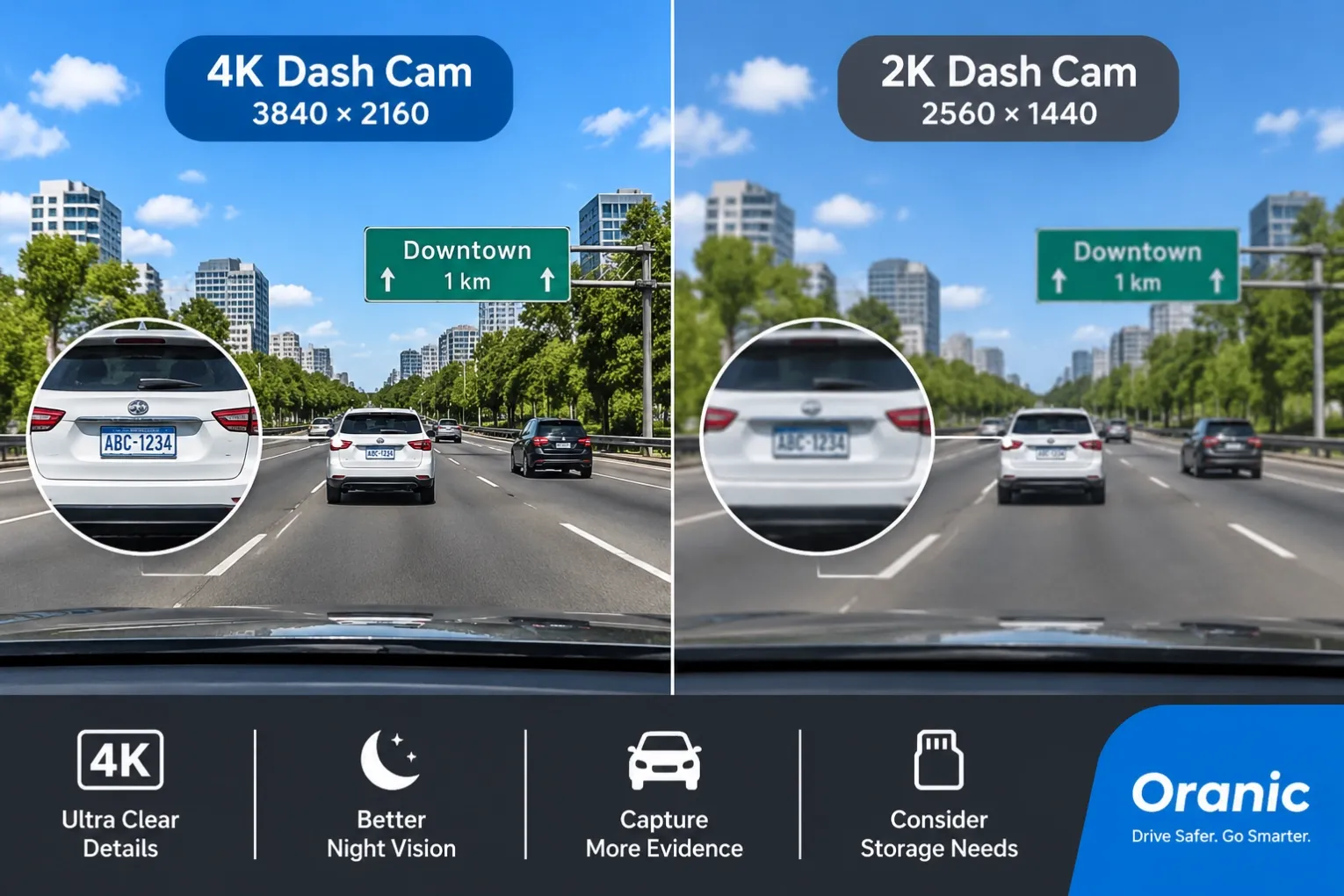
- 4K Dash Cam: Typically offers 3840 × 2160 pixels, providing approximately 8.3 million pixels per frame.
- 2K Dash Cam: Commonly offers 2560 × 1440 pixels, providing approximately 3.7 million pixels per frame.
A 4K dash cam captures significantly more image detail than a 2K model. This can make it easier to identify license plates, road signs, and other important details, particularly when reviewing footage after an accident.
However, actual image quality also depends on the image sensor, lens quality, image processing, and lighting conditions.
2. Storage and Memory Requirements
Higher resolution requires more storage space.
Since 4K video files are generally larger than 2K recordings, a 4K dash cam may fill up its memory card faster. Drivers who record continuously may need a larger-capacity microSD card or more frequent footage management.
A 2K dash cam offers a good balance between image quality and storage efficiency, making it a practical choice for everyday driving.
3. Performance in Different Lighting Conditions
Many drivers assume that 4K automatically means better night vision. However, resolution is only one factor affecting video quality.
A dash cam equipped with a high-quality Sony image sensor, a wide-aperture lens, and advanced image processing can deliver excellent nighttime performance, even at 2K resolution.
When comparing models, pay attention to sensor specifications, HDR capabilities, and low-light performance rather than resolution alone.
4. Which Dash Cam Should You Choose?
Your choice depends on your driving habits and recording requirements.
Choose a 4K dash cam if:
- You want maximum video detail.
- You frequently drive on highways.
- License plate recognition is a priority.
- You need high-resolution footage for insurance claims or fleet management.
Choose a 2K dash cam if:
- You want clear footage at a more affordable price.
- You prefer more efficient storage usage.
- You mainly drive for daily commuting.
- You need a practical balance of performance and cost.
5. Final Thoughts
Both 4K and 2K dash cams provide reliable video recording when equipped with quality components. A 4K dash cam offers greater image detail, while a 2K dash cam delivers a cost-effective balance for everyday use.
At Oranic, we offer advanced dash cam solutions with different resolutions, image sensors, and recording configurations to meet various driving and fleet management needs.
Choose the right resolution for your needs and enjoy safer, smarter driving.