Oct 23, 2026FAQs
Dash Cam with GPS vs Without GPS: What's the Difference?
Both options can record video, but GPS functionality provides additional location and driving data that may be valuable for individual drivers and commercial fleets.
Dash Cam with GPS vs Without GPS: What's the Difference?
A dash cam is an important tool for recording driving incidents and improving road safety. However, when choosing a dash cam, one common question is whether to select a model with GPS or without GPS. Both options can record video, but GPS functionality provides additional location and driving data that may be valuable for individual drivers and commercial fleets.
What Is a Dash Cam with GPS?
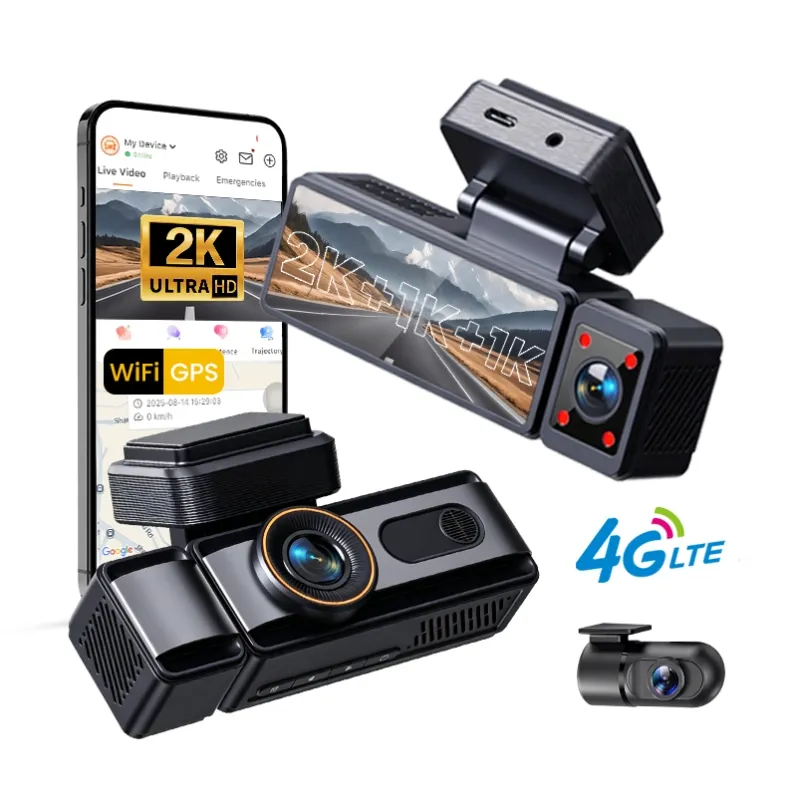
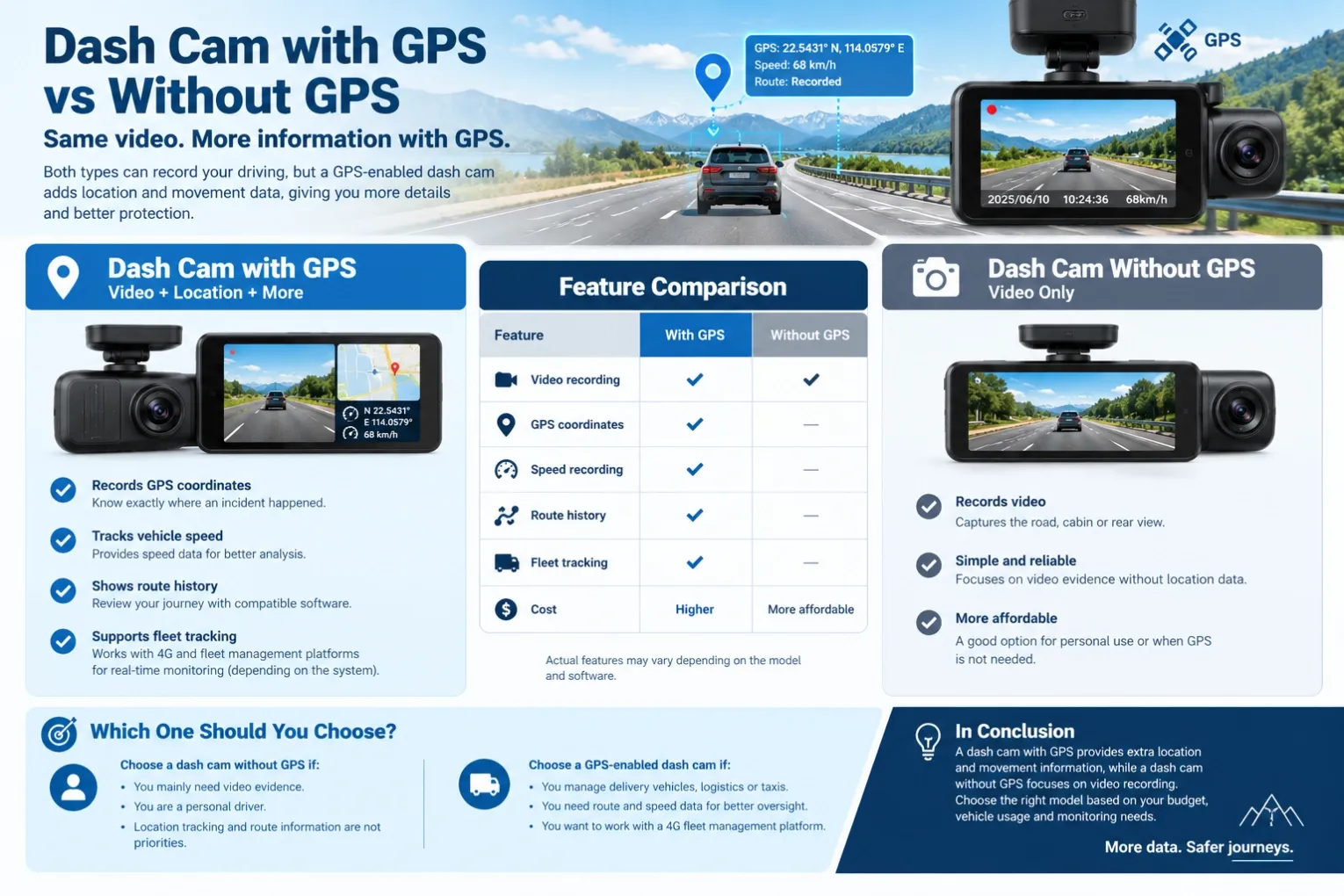
A dash cam with GPS uses a Global Positioning System receiver to record location and movement data alongside video footage. Depending on the model and software, it can record vehicle speed, GPS coordinates, route history, and driving location.
When reviewing recorded footage, users may be able to see where an incident occurred and how fast the vehicle was traveling. Some GPS-enabled dash cams also support route playback through compatible software, helping drivers and fleet managers review journeys more effectively.
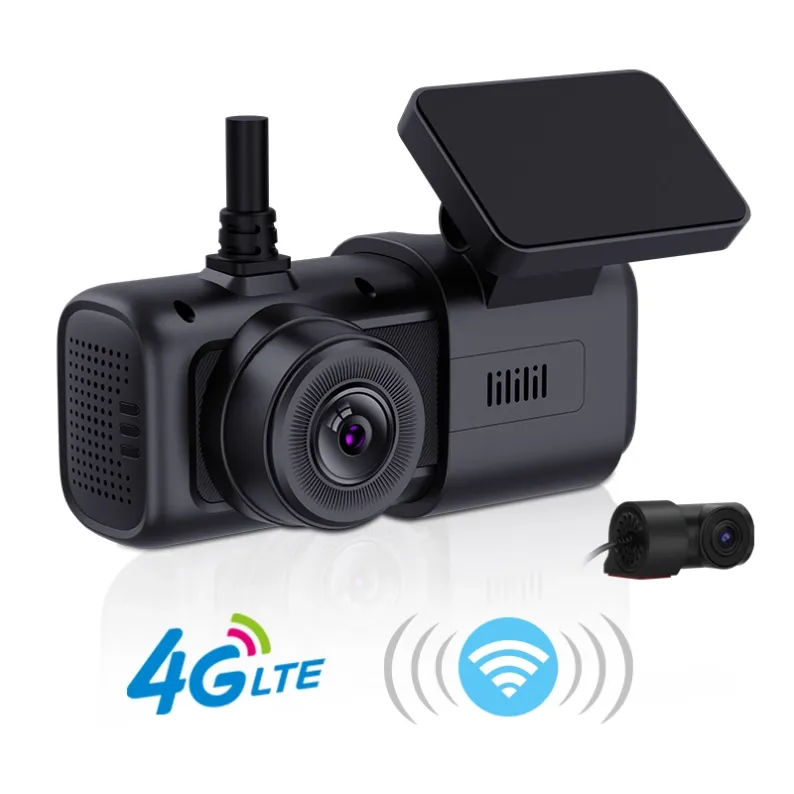
For commercial applications, GPS tracking can work with 4G connectivity and fleet management platforms to provide remote vehicle monitoring, route tracking, and location-based reporting, depending on the system.
What Is a Dash Cam Without GPS?
A dash cam without GPS primarily focuses on video recording. It captures the road ahead, the vehicle interior, or the rear view, depending on its camera configuration.
These models are often suitable for drivers who need basic video evidence without requiring location tracking or speed data. They may also offer a more affordable solution for personal vehicles or projects where GPS functionality is unnecessary.
However, without GPS data, identifying the exact recording location or reviewing a vehicle's route may be more difficult unless another system provides this information.
Dash Cam with GPS vs Without GPS: Key Differences
Feature | With GPS | Without GPS |
|---|---|---|
Video recording | Yes | Yes |
GPS coordinates | Available | Not available from the dash cam |
Speed recording | Supported on compatible models | Not available from GPS |
Route history | Available with compatible software | Requires another tracking source |
Fleet tracking | Can support GPS-based tracking | Usually requires a separate GPS device or system |
Cost | May be higher | Often more affordable |
Actual features depend on the dash cam model and its software.
Which Dash Cam Should You Choose?
A dash cam without GPS may be sufficient for personal drivers who mainly want reliable video evidence. It is a practical choice when location tracking and route information are not priorities.
A GPS-enabled dash cam is often more suitable for delivery vehicles, logistics companies, taxis, and commercial fleets. Location and speed data can help managers review trips, investigate incidents, and improve fleet visibility.
For businesses requiring real-time tracking, consider a 4G GPS dash cam that supports a compatible fleet management platform. Check whether GPS data can be accessed locally, through an app, or via a remote server.
Conclusion
The main difference between a dash cam with GPS and one without GPS is the additional location and movement information. Both can record important driving events, but GPS adds valuable context to video footage. Choosing the right model depends on your budget, vehicle usage, and monitoring requirements.
For fleet operators, combining GPS tracking, video recording, and fleet management software can provide a more comprehensive solution for vehicle visibility and operational efficiency.