Jul 3, 2026FAQs
H.265 vs. H.264: What’s the Difference for Dash Cameras?
The two most common standards are H.264 and H.265. While both are widely used, there are key differences that affect video quality, storage, and performance.
H.265 vs. H.264: What’s the Difference for Dash Cameras?
When choosing a dash camera for your vehicle or fleet, one of the most important features to consider is the video compression technology it uses. The two most common standards are H.264 and H.265. While both are widely used, there are key differences that affect video quality, storage, and performance.
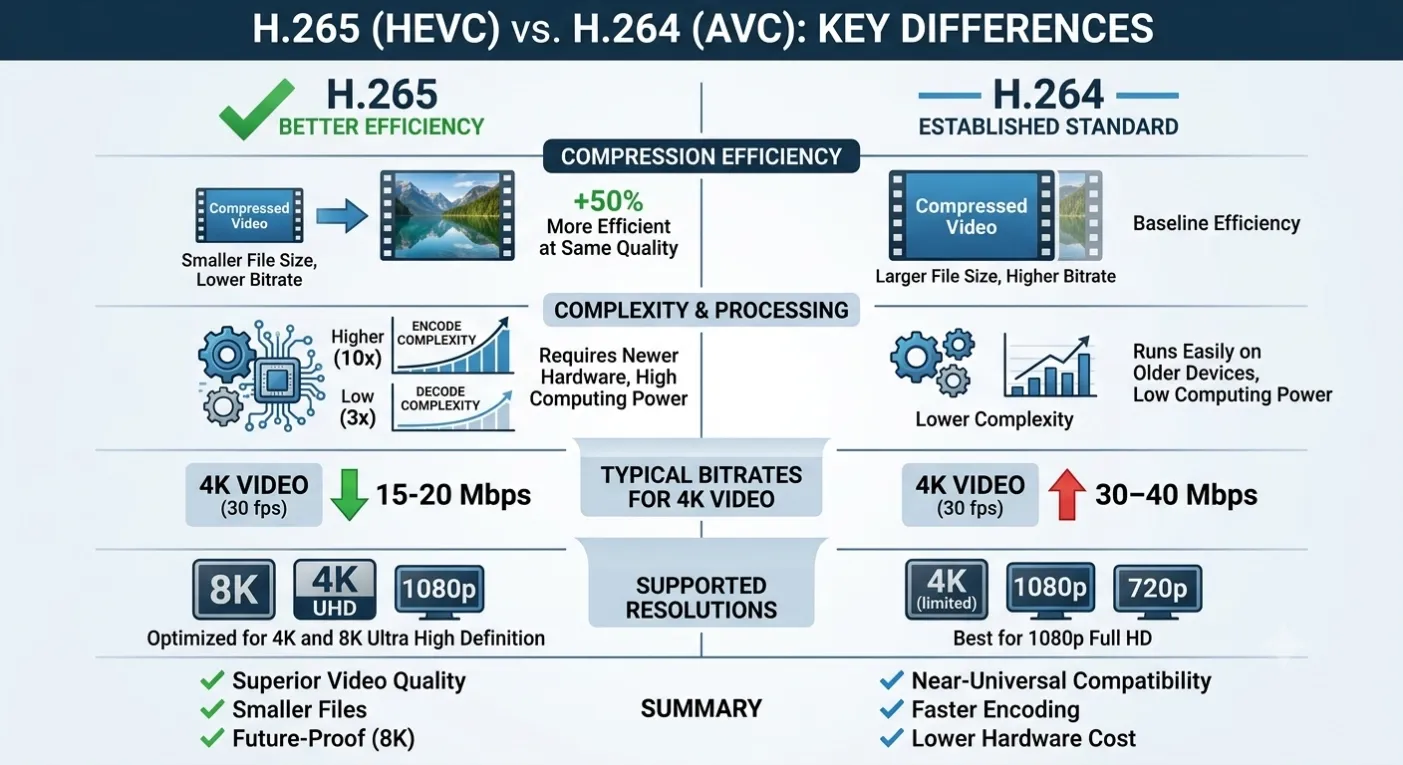
H.264, also known as Advanced Video Coding (AVC), has been the industry standard for many years. It compresses video efficiently and provides clear image quality, making it reliable for most dash camera applications. However, as video resolutions have increased—from Full HD to 2K and even 4K—H.264 requires more storage space and bandwidth to handle these larger files.
This is where H.265, or High Efficiency Video Coding (HEVC), comes in. H.265 is the newer standard that offers up to 50% better compression efficiency compared to H.264. In other words, it can deliver the same video quality at about half the file size. This means dash cameras using H.265 can record longer hours of footage on the same memory card, or provide higher resolution video without quickly filling up storage.
For fleet managers and drivers, the advantages are clear:
More storage savings – Record more footage without upgrading storage cards.
Better video quality – Capture sharper details, especially important for license plates and accident evidence.
Efficient transmission – Upload or share video files faster, saving bandwidth.
The main consideration is compatibility. Not all older devices and players support H.265 playback, so users need to ensure that their dash camera and software platform can handle it.
In short, if you’re looking for future-proof technology with higher efficiency and longer recording capacity, H.265 is the smarter choice. But for basic needs and maximum compatibility, H.264 still gets the job done.