Aug 27, 2026FAQs
How Fleet Managers Can Use Dash Cam Footage
How Fleet Managers Can Use Dash Cam Footage
1. Catch Dangerous Driving Habits Early
GPS and telematics show when a driver slammed on the brakes, but dash cam footage shows why. Video allows managers to spot actual root causes—tailgating, phone distraction, or fatigue—so coaching can address specific habits rather than generic safety guidelines. (Models with AI-driven ADAS and DMS take this a step further by alerting drivers to lane drifting or drowsiness in real time.)
2. Settle Accident Claims Fast
Determining fault after a collision usually comes down to conflicting driver statements. Front- and cabin-facing footage gives you an objective timeline of traffic conditions, right-of-way, and driver reaction times. Having clear visual proof speeds up insurance processing and shields your fleet against fraudulent or false claims.
3. Build Realistic Driver Coaching Programs
Generic training modules rarely change behavior. Reviewing actual road footage with drivers provides clear, real-world examples of aggressive cornering, near-misses, or great defensive driving. Using real scenarios makes one-on-one coaching far more practical and engaging.
4. Protect Against False Liability
When a commercial truck or van is involved in an incident, it often gets blamed by default. Clean video evidence protects both the company and the driver from unfair liability, preventing costly out-of-court settlements when your driver wasn't at fault.
5. Pair Video with Telematics for Full Visibility
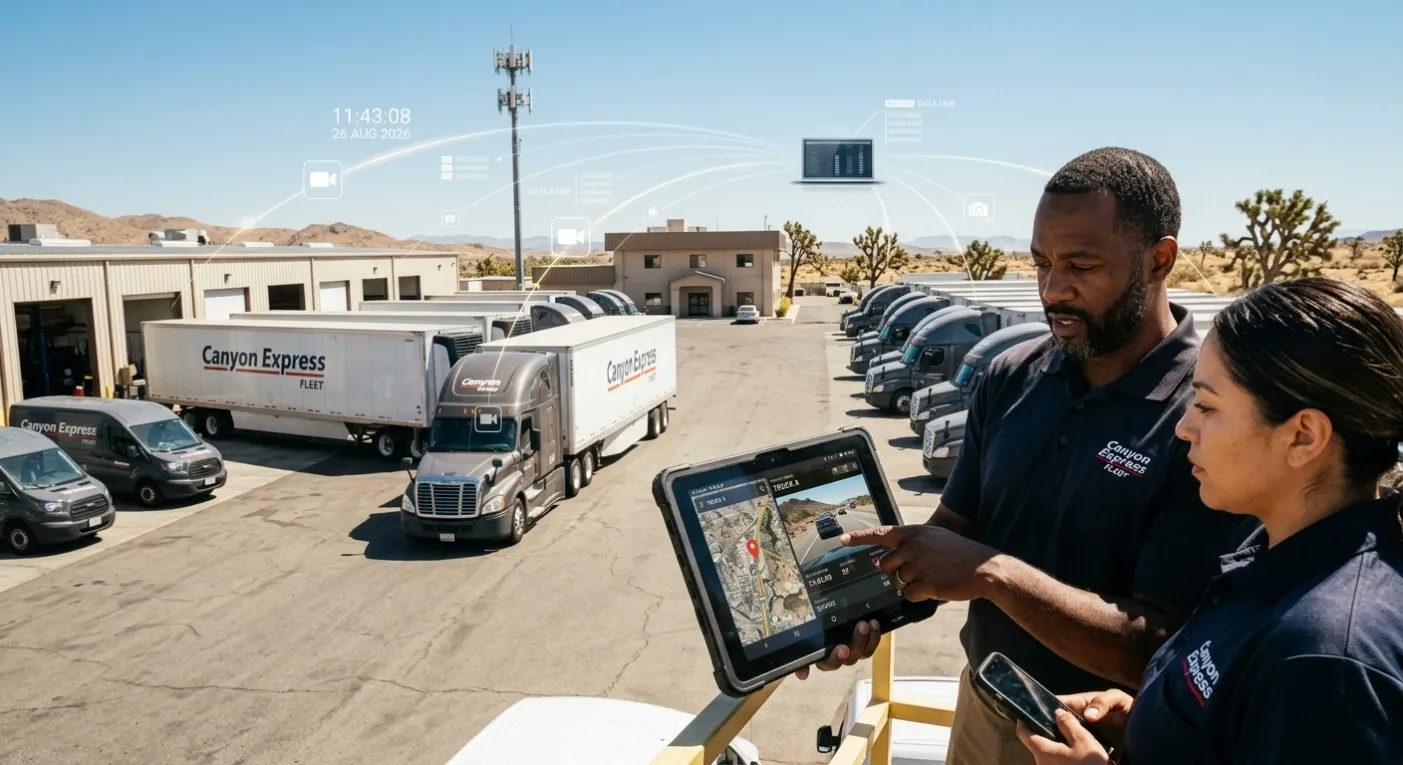
Video clips are most useful when linked directly to GPS locations, speed data, and event triggers (like hard cornering or sudden impact). Integrating dash cams into your fleet software lets you instantly jump to the exact video clip tied to a flagged event, saving hours of manual footage review.