Aug 7, 2026FAQs
LTE Dash Cam vs. WiFi Dash Cam: Which One Should You Choose?
Choosing the right dash cam goes beyond resolution. The most critical decision for buyers and fleet operators is choosing between an LTE-connected model and a local WiFi model.
LTE Dash Cam vs. WiFi Dash Cam: Which One Should You Choose?
Choosing the right dash cam goes beyond resolution. The most critical decision for buyers and fleet operators is choosing between an LTE-connected model and a local WiFi model. Both record clear driving footage, but their connectivity determines how, when, and where you access that data.
What Is a WiFi Dash Cam?
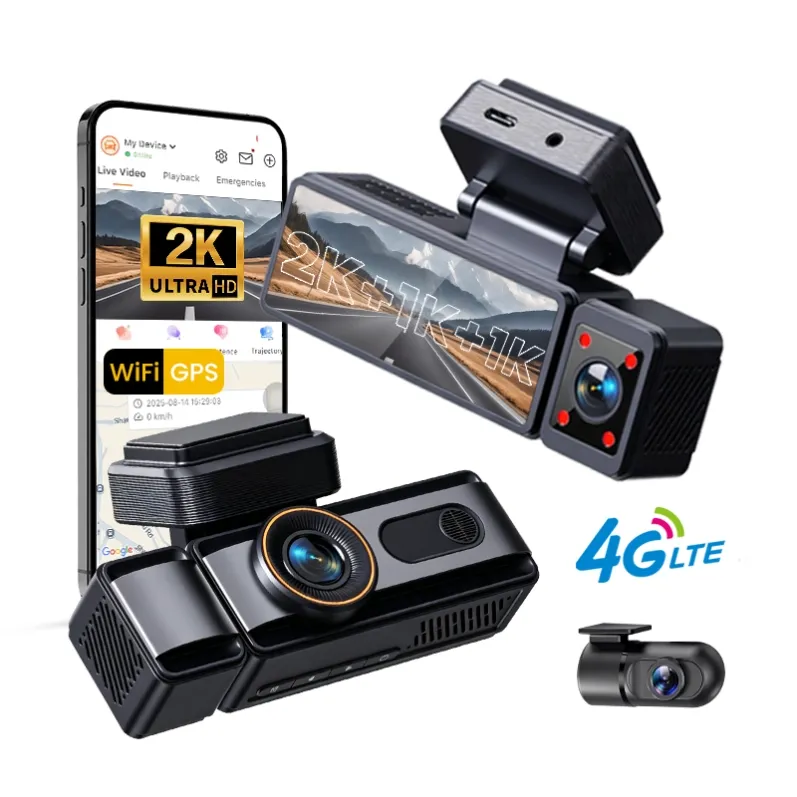
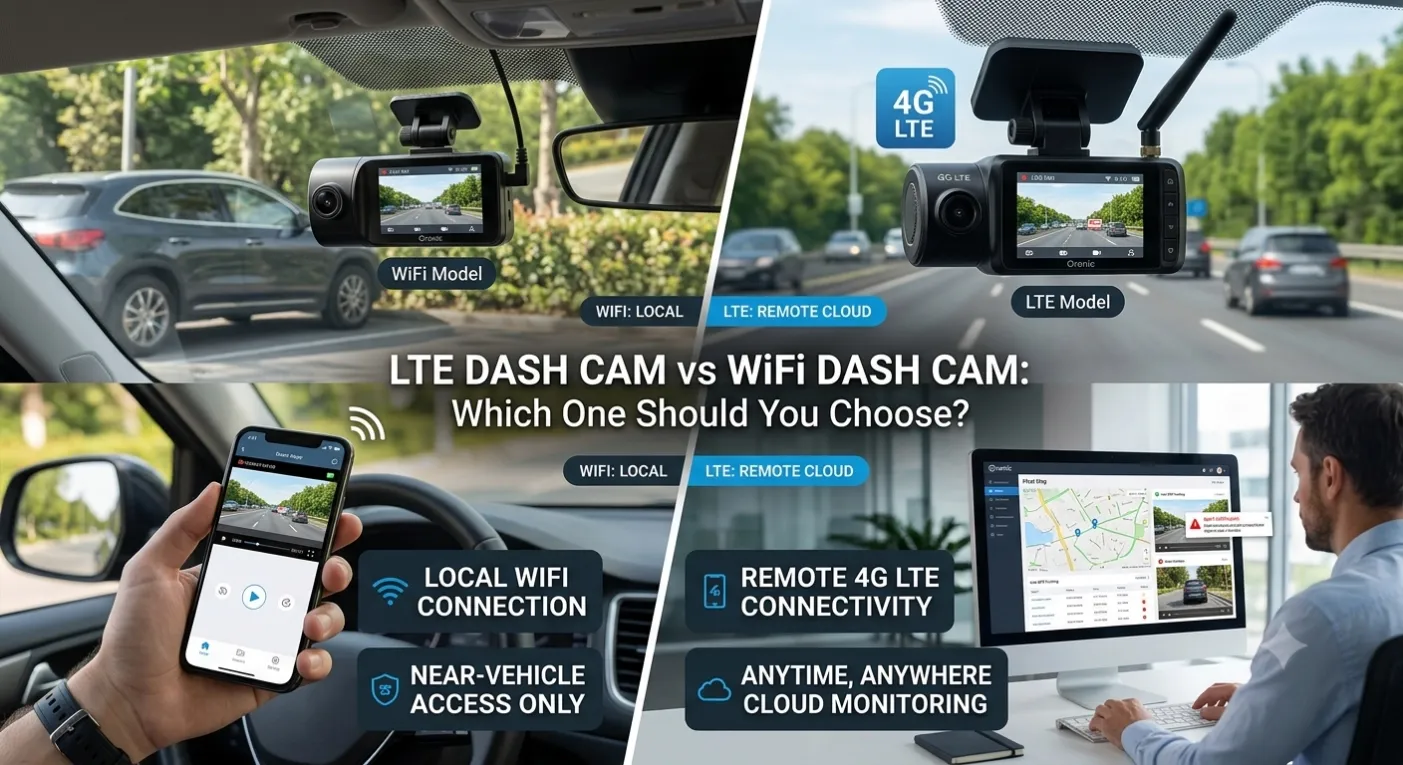
A WiFi dash cam creates its own local hotspot, allowing you to connect a smartphone directly to the device when sitting in or standing near the vehicle. Through an app, you can stream live footage, download incident clips, adjust settings, or update firmware without pulling out the microSD card.
The limitation is range: once you step away from the car, the connection drops, meaning no remote access or parking updates while away.
- Ideal for: Daily commuters, family vehicles, and drivers who only need to review or save footage locally after an incident.
What Is an LTE Dash Cam?
An LTE dash cam uses an integrated 4G SIM card to connect directly to cellular networks. Instead of needing a nearby phone, it continuously syncs video feeds, telemetry, and alerts to a cloud platform accessible from anywhere.
This always-on connection allows vehicle owners and fleet managers to monitor live video, track real-time GPS locations, receive instant impact or tampering alerts, and pull footage remotely—even when the vehicle is parked miles away.
- Ideal for: Commercial fleets, logistics providers, rideshare drivers, delivery services, and rental agencies needing continuous oversight.
Key Differences: Connectivity & Capability
The core difference comes down to distance and continuous cloud functionality.
WiFi models offer a simple, cost-effective way to view footage without subscription fees, making them the default choice for personal cars. LTE models act as active telematics hubs. Beyond video, they power advanced features like real-time GPS tracking, AI driver monitoring (DMS), advanced driver assistance (ADAS), and instant cloud backup during accidents.
Which One Makes Sense for You?
Go with a WiFi Dash Cam if you want a reliable, plug-and-play recorder for personal use without ongoing monthly costs. It handles basic evidence gathering effortlessly.
Choose an LTE Dash Cam if you manage multiple vehicles, operate a business, or need peace of mind through 24/7 remote monitoring and instant event notifications.
Build Your Hardware Solution with Oranic
At Oranic®, we design and manufacture both high-performance WiFi dash cams for consumer retail and enterprise-grade 4G LTE systems. Our LTE units support full cloud integration, live streaming, ADAS/DMS AI vision systems, and robust fleet management platforms.
Whether you need off-the-shelf camera hardware or customized OEM/ODM solutions tailored to your brand, contact the Oranic team today to discuss your requirements.