Sep 15, 2026FAQs
SD Card vs. Cloud Storage for Dash Cams: Which One Fits Your Needs?
When choosing a dash cam—whether for daily personal driving or managing an entire enterprise fleet—the big question usually comes down to video storage: local SD card or cloud-based?
SD Card vs. Cloud Storage for Dash Cams: Which One Fits Your Needs?
When choosing a dash cam—whether for daily personal driving or managing an entire enterprise fleet—the big question usually comes down to video storage: local SD card or cloud-based?
Neither is objectively "better." The right choice depends entirely on how many vehicles you manage and how quickly you need access to footage.
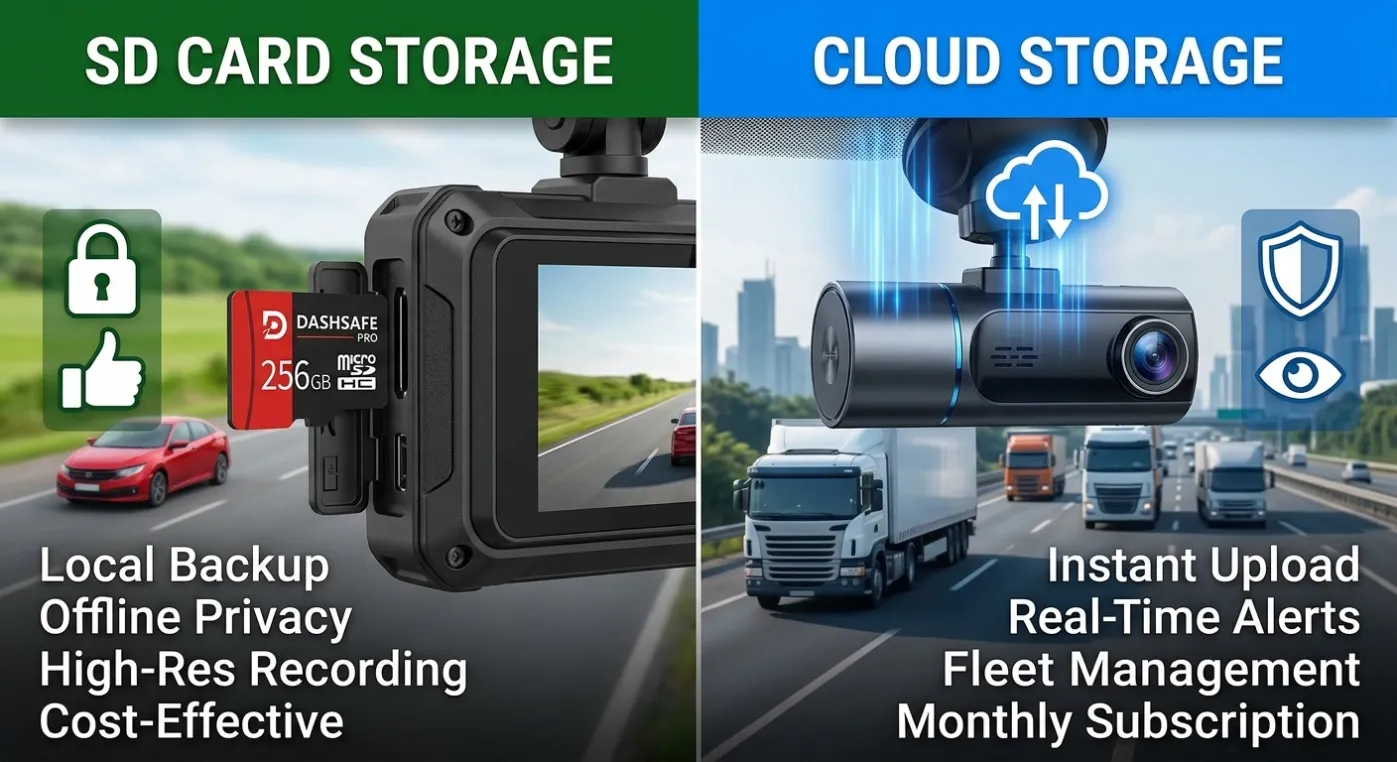
SD Card Storage: Simple, Cost-Effective, Plug-and-Play
For individual drivers, standard microSD storage is hard to beat for everyday protection.
- No Recurring Fees: Buy the card once, plug it in, and you’re done—no subscriptions or data plans required.
- 100% Offline Reliability: It records continuously off-grid. Underground garages, rural routes, or zero-cellular zones won't stop it from saving video in a seamless loop.
- Handles High Bitrates Gracefully: Easily supports high-resolution footage (1080p, 2K, or 4K) without consuming network bandwidth.
The Drawbacks: Physical cards eventually run out of capacity or degrade over time. If a severe collision damages the unit or the device gets stolen, the local footage goes with it. Manual retrieval also becomes a logistics headache for multi-vehicle setups.
Cloud Storage: Real-Time Remote Access Built for Fleet Management
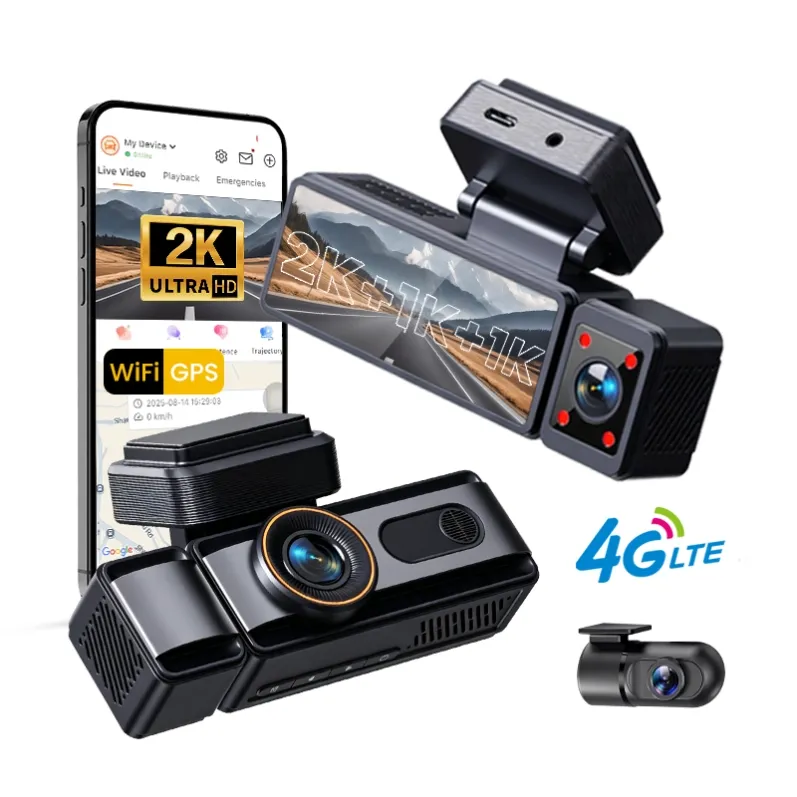
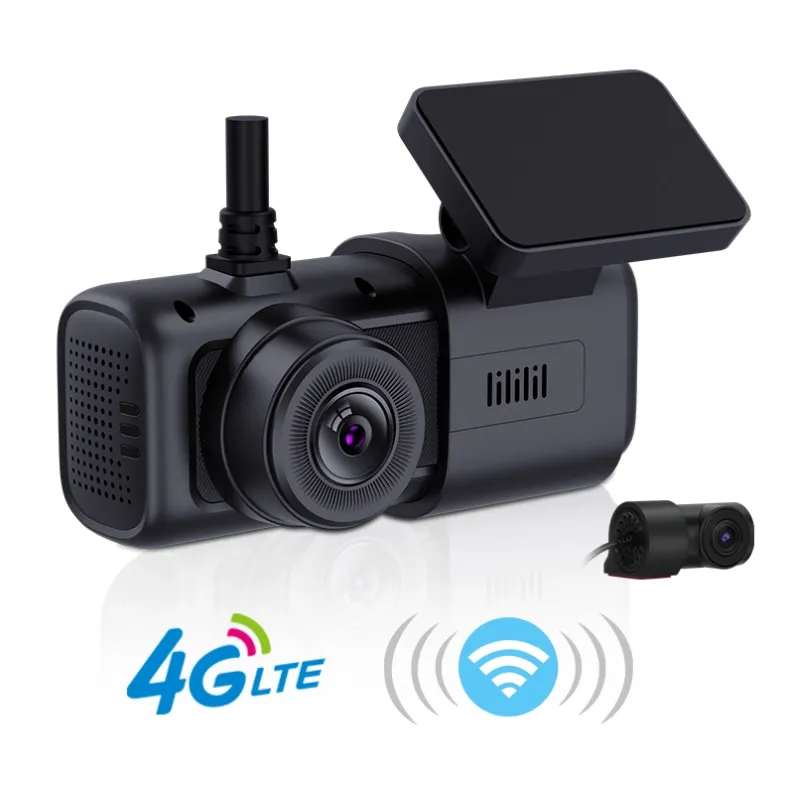
Cloud-connected dash cams rely on 4G LTE or Wi-Fi to upload critical clips straight to a centralized server. For logistics, trucking, delivery, and passenger fleets, this is practically essential.
- Instant Remote Retrieval: Managers can review, stream, or download footage remotely from an office dashboard—eliminating the need to pull vehicles off the road just to swap SD cards.
- Proactive Safety & Alerts: Paired with AI, 4G systems send instant event alerts for high-risk behaviors—like driver distraction, fatigue, tailgating, or harsh braking.
- Tamper-Proof Evidence: Even if the vehicle or hardware is damaged in an impact, critical event clips are already backed up securely off-site.
The Drawbacks: Requires steady cellular connectivity and incurs monthly data and cloud subscription costs.
The Verdict: Which Should You Choose?
- For Personal Drivers: Stick with a High-Endurance SD Card. It gives you clean, high-resolution coverage for accidents at the lowest cost.
- For Business Fleets: Go with Cloud Storage. The remote accessibility, driver safety monitoring, and reduced operational downtime far outweigh the subscription fees.
The Hybrid Approach: In practice, the most effective commercial setup isn't choosing one over the other—it's combining both. Local SD storage provides 24/7 continuous backup, while 4G cloud integration pushes immediate event alerts and critical video clips directly to your desk.