Jun 26, 2026News
Understanding G-Sensor: Working Principle and Applications in Cars
A G-Sensor, also known as an accelerometer, is an electronic component that detects changes in acceleration.
Understanding G-Sensor: Working Principle and Applications in Cars
What is a G-Sensor?
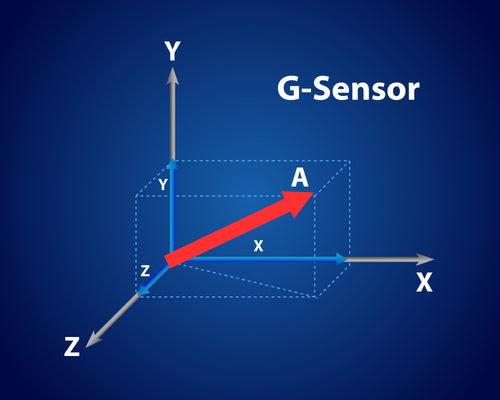
A G-Sensor, also known as an accelerometer, is an electronic component that detects changes in acceleration. It measures acceleration along the X, Y, and Z axes, helping devices understand motion or orientation. G-Sensors are widely used in automotive safety systems, smartphones, tablets, drones, and various electronic devices.
How Does a G-Sensor Work?
The G-Sensor works based on inertia principle. When a device experiences acceleration or deceleration, a tiny internal mass (called the proof mass) moves due to inertia. This displacement changes the sensor’s internal capacitors, resistors, or piezoelectric elements, generating an electrical signal. The control system interprets this signal to determine motion or orientation.
Step-by-step working process:
- Acceleration effect: The proof mass shifts when the device accelerates or decelerates.
- Signal conversion: The displacement alters electrical properties inside the sensor, producing a measurable signal.
- Signal processing: The signal is amplified and processed to provide precise acceleration data.
Action trigger: In cars, the G-Sensor can deploy airbags or lock dashcam footage. In devices, it enables screen rotation, step counting, and gesture recognition.
Applications of G-Sensors in Cars
In vehicles, G-Sensors are essential for safety and protective systems:
Collision detection: Detects sudden acceleration changes during a crash to trigger airbags instantly.
Dashcams: Locks video footage during sudden braking or collisions to prevent overwriting.
Vehicle stability control: Works with ABS and ESP systems to enhance driving safety.

Choosing and Maintaining a G-Sensor
Sensitivity: Choose appropriate sensitivity; too high may cause false triggers, too low may delay response.
Calibration: Regular calibration ensures accurate acceleration detection.
Installation position: Placement affects accuracy; usually installed near the device’s center of gravity.
Conclusion
The G-Sensor (accelerometer) is a vital component in modern cars and smart devices. Its primary function is real-time monitoring of acceleration changes and providing reliable signals. Proper application and maintenance of G-Sensors can significantly improve vehicle safety and device intelligence.